
Is Dubai Property Market Slowing Down in 2026

Introduction
Dubai real estate transactions hit an astonishing AED 176.7 billion in the first quarter of 2026 alone. This numbers-heavy reality completely shatters the popular internet narrative that the city is staring at an immediate, catastrophic property crash.
What we are witnessing is not a market structural failure, but a highly predictable transition toward mature, single-digit growth.
Savvy capital is currently repositioning itself because the days of making easy fortunes on blind off-plan flips are officially over.
Dubai Real Estate Data Analysis for 2026
Many buyers look closely at the latest charts. You see mixed media headlines every single day. Some writers claim the boom is ending. Others say the growth will never stop.
The truth on the ground is much more balanced. The market has moved from a fast sprint into a steady run. Property gains across the housing sector should grow by 10 percent this year. That is a normal drop from the 20 percent spikes seen before.
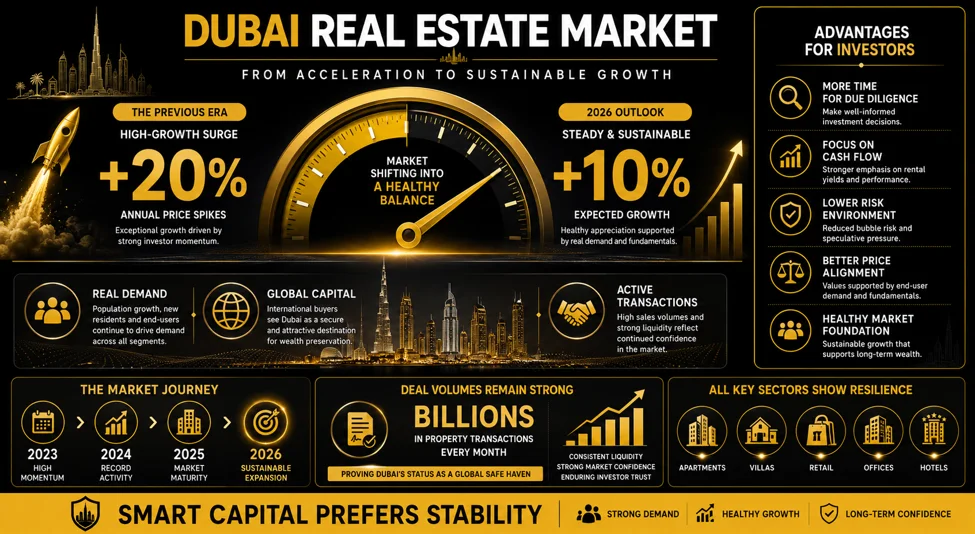
What Investors Should Know before spending cash, look at the main numbers. A slower growth rate shows a healthy market. It allows real demand from residents to match home values.
Slower price growth creates a safer path for your wealth. It stops the rise of dangerous market bubbles. Serious buyers now have more time to check assets based on use and cash flow.
The total count of sales deals stays very high. Local land groups still report billions in monthly property moves. This steady cash flow proves that global buyers still see the city as a safe vault.
Why the Shift From Panic to Stabilization Matters
Flippers who wanted to sell homes for fast cash are leaving the game. That is great news for business owners and wealthy buyers. The current setup favors long-term owners who want high rental gains and asset safety.
To make smart moves, you must look at Dubai real estate 2026 trends as small, separate areas. The city averages do not tell the whole story. Some neighborhoods are moving sideways. Other top zones still rise fast.
Knowing these local shifts is key when you invest in Dubai property this year. The days of buying any random flat on paper and doubling your cash are gone. Success now requires a clear view of new supply lines and true renter needs.
Economic growth outside the oil sector stays very strong. The local population grows by thousands of business experts every few months. These people need top spaces to live and work, keeping real demand alive.
As we check the numbers, the main question moves from a simple yes or no to a study of asset value. This brings us back to the reality of what Investors Should Know. You are dealing with a mature system that is adjusting well to its own fast growth.
The Great Divergence Between Villas and Apartments
The biggest trend this year is the huge gap between property types. Villas and apartments act like two totally different asset classes. This split comes down to simple supply limits.
Why High-End Villas Maintain Strong Growth
Villas and townhouses should see price jumps of up to seventeen percent this year. This top score comes down to basic scarcity. Single-family homes make up less than twenty percent of the total housing supply in the city.
Rich families move to the city for the long term. They want big yards, private pools, and good parks. Because builders cannot create new coast land overnight, old villas hold great value.
The Apartment Supply Shock
The apartment sector tells a different story. Growth here is slowing to around seven percent. High towers make up over eighty percent of the current building plan. Tens of thousands of new flats enter the market over the next two years.
This big wave of options gives renters more power. Rent growth for standard flats is flattening out across many areas. Investors who bought basic flats in high-supply zones may see their rental gains drop a bit.
To keep high returns, you must focus only on flats near main metro lines, business hubs, or water views. Building quality and developer names matter more than ever before. Boutique builders like Ellington Properties have built a strong track record of delivering quality product that holds its rental appeal over time.
Off Plan Versus Ready Properties This Year
The balance of power between buildings under construction and ready homes has shifted. In past years, off-plan sales broke every record because of easy payment plans. Today, smart buyers are changing their path.
Ready homes draw great interest from funds and cash buyers. Investors want fast cash flow and real assets that can take in renters within weeks. Buying a ready home removes the risk of building delays and sudden map changes.
- Ready Property Perks: Fast rent collection, open amenities, easy check of past prices.
- Ready Property Risks: Higher upfront cash needed, older building upkeep costs, fewer payment extensions.
- Off-Plan Perks: Lower entry costs, phased cash moves, potential gains during building work.
- Off-Plan Risks: Late key handovers, local supply surges at finish, reliance on future market trends.
Off-plan projects still take a large share of sales because builders offer split payment times. However, smart investors avoid small builders with bad completion histories. Buyers now want a perfect track record of finished projects before they sign. Developers like Emaar Properties and Sobha Properties have earned that trust through consistent on-time delivery across hundreds of projects.
When you track these shifting buyer paths, the main view becomes clear. The question of a market slowdown matters less than how you pick your exact asset entry point.
Commercial Space is the Quiet Leader of 2026
While housing dominates public chat, business property is quietly beating almost every other sector. A massive shortage of top office spaces has started a wild corporate race.
Prime Office Valuations Outpacing Residential Units
Prices and rents for top office spaces should climb by fifteen percent this year. This trend beats the housing market by a mile. Foreign business owners arrive in large groups, pushing office use to historic highs.
The local business growth plan requires global firms to set up main offices here. Only a small amount of top business space is finishing this year. This tight supply ensures that office landlords keep great pricing power.
Why Business Owners Are Buying Instead of Renting
Many foreign business owners choose to buy their offices instead of renting them. Paying high business rent means a permanent cash drain in a rising market. Owning the physical office fixes long-term corporate costs.
Buying corporate property also opens paths for bank loans later if needed. It sets the business firmly within the local economy. Whole buildings and small office lots in the main trade zones see fast sales moves.
Industrial sheds and storage hubs also experience strong rent growth. The rise of local online shops and regional supply grids keeps these specific assets highly profitable.
The HNWI and Expat Shift in Luxury Neighborhoods
Wealthy buyers are changing their shopping habits to match the steady market. The focus has moved from fast price jumps to wealth safety and long-term peace. Global wealth continues to flow away from high-tax zones into local luxury assets.
Property prices inside top coastal areas stay safe from standard apartment supply gains. Ultra-rich buyers do not look for basic flats. They want rare, unique asset pieces that offer total privacy and top safety. Developers like Omniyat Properties specialise in exactly this type of ultra-prime product, with limited-unit projects that hold their value through every market cycle.
Cash deals lead the luxury end of the market. This high cash use keeps the elite sector safe from global central bank rate shifts. Wealthy buyers use their own liquid funds to secure these prime assets.
This split from global debt markets keeps the luxury arena very steady. Even if world credit terms tighten, local high-end deals keep their speed because they do not need standard bank choices.
How Visa Systems and Policy Frameworks Stabilize Your Capital
The long-term view for the local market stays tied to smart rule updates. The steady pace we see this year comes from direct government rules designed to stop wild market swings.
The big Golden Visa plan has passed major milestones. Over 150,000 active holders now live in the city. This visa lets foreign asset owners stay in the country for ten years without a local backer. It turns short-term buyers into permanent residents who spend money locally. Our full Golden Visa property guide walks you through every requirement, eligible area, and document you need to apply without any delays.
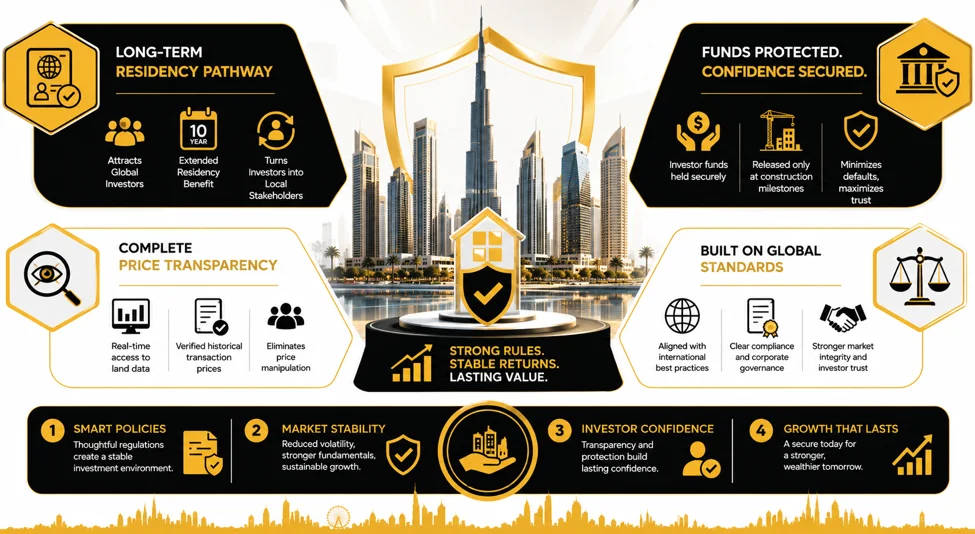
Strict escrow account laws protect buyer cash during the building phase. Builders cannot touch investor funds unless they hit clear building steps. This high level of safety has cut default risks across the whole market.
The use of real-time data from the land office lets buyers see exact past sale prices. This openness makes it impossible for bad agents to pump up property prices. The whole system runs on clear international rules of corporate action.
A Comprehensive Neighborhood Performance Guide
To invest well this year, you must know which areas hold their ground and which ones face drops from new handovers. Let us look at the facts for five main zones.
Palm Jumeirah
This famous island remains the best choice for asset safety. Waterfront villas here see no price drops because there is no new land to build them. It acts as a safe vault for global rich cash.
Dubai Hills Estate
This master zone continues to draw wealthy expat families. The mix of top villas, great schools, and a huge golf course keeps user demand high. Asset values here beat the city average.
Jumeirah Village Circle
This area is a top choice for apartment investors who want high rental gains. While price growth is slowing down here, strong demand from working experts keeps net returns very high. You just need to pick good buildings.
Business Bay
This district is the heart of the ongoing business property rush. Office units here see fast rent rises due to the true shortage of corporate space. Flats near big business towers also profit from steady worker demand.
Downtown Dubai
Core asset safety defines this central area. Properties facing main landmarks keep top values due to their permanent tourist and trade appeal. It stays a safe choice for steady investors who value top placement over risky growth.
Actionable Playbooks for Different Investor Archetypes
Your investment plan must match your clear cash goals and work setup. A single generic plan will lead to poor results in a normal market.
The Expatriate Looking for a Family Home
If you are a long-term resident renting a villa, this year offers an ideal time to buy. Loan rates are steady, and the slower price growth gives you real room to bargain. Focus on old master areas with done roads and nearby schools.
The Foreign Business Owner Seeking Commercial Footprints
Stop throwing cash into high business rents that offer zero long-term equity. Use corporate funds to buy a top office space in zones like Business Bay or DIFC. Look for units that offer easy transit links for your team.
The High-Net-Worth Individual Aiming for Capital Preservation
Avoid high-density apartment areas that have huge future building plans. Place your cash into limited waterfront villas or branded luxury homes in top locations. Stick to cash buys to keep your assets free from world debt shifts.
Checking your cash choices under these terms shows the final truth behind the question. The slower pace is actually your best friend because it clears out risky noise and shows true value. Our team at PFOC Properties has a full breakdown of how Dubai property returns compare with other markets if you want to put the numbers side by side before committing.
Conclusion
A steady market requires tight risk checks. You can no longer rely on a rising market to fix poor buying choices. You must actively protect your cash from specific building risks.
- Supply Mix Risk: Check the total count of units finishing in your chosen area. Avoid zones where major towers are delivering thousands of identical flats at the same time.
- Builder Key Gaps: Check the past building times of your developer. Many secondary builders announce beautiful projects but take years past the deadline to hand over the keys.
- High Payment Plan Schemes: Some off-plan projects offer long payment plans but pump up the base price per foot. Calculate the total cost against ready market values to ensure you do not overpay for time.
- Building Upkeep Neglect: Poorly managed towers lose their renter appeal within a few years. Check the common areas, gym spots, and lift setups of a building before making a ready asset purchase.
By focusing on these protective steps, you ensure that your real estate assets stay highly profitable through every part of the economic cycle. Top-quality assets always survive market shifts better than risky ones.
The 2026 market rewards steady investors who prioritize cash flow and top physical locations over paper promises. True value is found by looking past generic headlines and checking local facts.
Contact our expert team at PFOC Properties today to review your property goals. We will help you secure the highest-paying assets in the market this year.
Frequently Asked Questions
Will Dubai property prices drop significantly in 2026?
A broad market crash is highly unlikely this year. Property gains are simply slowing to a steady eight to ten percent annual growth rate, allowing the housing market to settle down naturally.
Which is a better investment right now, off-plan or ready property?
Ready properties are great for fast rent cash and quick asset safety. Off-plan units stay good only if you secure top areas with major builders who hold perfect project finish records.
Why is the commercial office sector outperforming residential real estate?
A severe shortage of top business space matches a massive influx of foreign firms. Business property values are growing at fifteen percent, easily beating the residential average this year.
How does the UAE Golden Visa affect the property market?
The visa program helps long-term stays rather than fast market flips. With over 150,000 active holders, it builds a steady transaction floor by keeping cash and families inside the country.
Are rental yields in Dubai still high compared to global cities?
Yes, net gains for well-placed ready units sit between six and seven and a half percent. This completely beats old cities like London or New York, where net returns rarely cross three percent.
Is there an oversupply risk for apartments in 2026?
Some mid-market areas with high building plans face flat rental rates. However, old delivery gaps mean actual handovers usually fall short of big developer claims made at the start.
How are global interest rate changes impacting Dubai property buyers?
Lower loan rates help local users buy or upgrade their homes. However, cash buyers still lead the luxury tier, meaning high-end deals stay safe from global central bank rate moves.
What are the top areas to invest in Dubai property this year?
Focus on old, high-demand zones. Palm Jumeirah remains best for asset safety. Dubai Hills Estate offers great family villa growth, while Jumeirah Village Circle delivers steady returns for standard apartments.