
Villas vs. Penthouses vs. Waterfront Apartments: Which Dubai Asset Class Fits Elite Investors Best?

Dubai’s real estate market in 2026 has changed. It’s no longer just about buying and holding. The market has become more complex. Asset selection now depends on tax goals and how quickly you can sell. For elite investors, the choice matters. You might pick a villa in Emirates Hills. Or you could choose a branded penthouse in Business Bay. Maybe a waterfront apartment in Emaar Beachfront fits better. This isn’t just about lifestyle. It’s a smart capital move.
Introduction:
Dubai’s real estate market changed in 2026. Buying and holding is no longer enough. The market is more complex now. Asset choice depends on your tax goals and how fast you can sell. For elite investors, the choice carries real weight. You might want a villa in Emirates Hills, a branded penthouse in Business Bay, or a waterfront apartment in Emaar Beachfront. This isn’t just a lifestyle call. It’s a smart capital move. If you’re ready to invest in Dubai real estate, understanding which asset class fits your goals is the first step.
Executive Investor Summary
Dubai villas are the top pick for long-term wealth in 2026. Limited supply and strong demand drive land value up. Penthouses work as high-status trophy assets. They bring prestige but also more risk, and exit timing matters far more. Waterfront apartments give you the best liquidity and the steadiest rental income, powered by Dubai’s short-term luxury rental market.
Quick ROI & Liquidity Snapshot (2026 Estimates)
| Asset Class | Target Net Yield | Projected Growth (3yr) | Liquidity Rank | Best For |
|---|---|---|---|---|
| Villas | 4% – 5.5% | 15% – 25% | Moderate | Legacy Wealth & Residency |
| Penthouses | 3.5% – 5% | 12% – 20% | Low (Niche) | Status & Short-Term Plays |
| Waterfront Apartments | 6.5% – 8.5% | 10% – 18% | High | Cash Flow & Yield |
What Are the Key Dubai Luxury Property Trends for 2026?
Key Trends Investors Must Know
The luxury market has split from the mid-market in 2026. Mid-range homes face pressure from too many new builds. Luxury homes stay mostly safe from this pressure. For a deeper look at where the market is heading, see Dubai real estate market trends for international investors.
Supply Scarcity: Developers plan to add over 40,000 new apartments this year. Ultra-luxury villas stay rare. Prime zones like Jumeirah are nearly full. Newer areas like Tilal Al Ghaf face the same problem. Land is running out fast.
Global Wealth Migration: Dubai has become a top choice for the ultra-wealthy. Many are leaving Europe and high-tax countries. The UK and North America are seeing large exits as Dubai draws more global money.
The Branded Residence Boom: Big brand projects like Ritz-Carlton and Four Seasons attract heavy investment in 2026. These homes cost 30% more than non-branded ones. Quality and prestige drive the premium. To understand why Dubai keeps pulling global capital, read more about why Dubai is the ultimate destination for luxury real estate investment.
How Are Elite Investors Changing Their Strategy?
Smart buyers have shifted their approach. Quick flips are out. Long-term, lifestyle-driven buying is in. The goal has changed. It’s no longer about a fast 10% gain. Investors want 10-year residency through the Golden Visa. They want rare assets where the view and plot size make the home truly unique.

Asset Class Breakdown
What Makes Dubai Villas the Best Long-Term Investment?
Villas differ from penthouses in one key way: you own the land. In a freehold market, a villa gives you a finite piece of earth, and that scarcity has real value. For a detailed side-by-side comparison, our guide on apartments vs villas in Dubai breaks down the key differences for investors.
Investment Profile: Villas form the base of smart Dubai property plans. They protect your money, offer full privacy, and allow changes to the structure. These changes raise value over time.
Financial Considerations: Villa prices in 2026 have a higher floor than most asset types. They’ve held steady. But you must plan for upkeep costs, including garden care, pool maintenance, and higher cooling bills for large spaces.
Best Suited For: Two groups benefit most. First, investors seeking the 10-year Golden Visa. Second, those building wealth to pass on to future generations.
How Do Dubai Penthouses Work as Trophy Assets?
A penthouse is more than a flat. It makes a bold statement. In 2026, that exclusivity drives the cost.
Investment Profile: Supply is very tight. Most towers have just one or two penthouses, which pushes prices up. But selling is hard. Your buyer pool is tiny, limited to the global top 0.1%.
Financial Considerations: Service fees run much higher than standard flats. Private extras like personal lifts and rooftop pools add to the ongoing cost.
Best Suited For: Status-driven investors and those running high-end short-term rentals. Peak tourist season runs from October to March. Penthouse rentals earn their highest rates during this window.
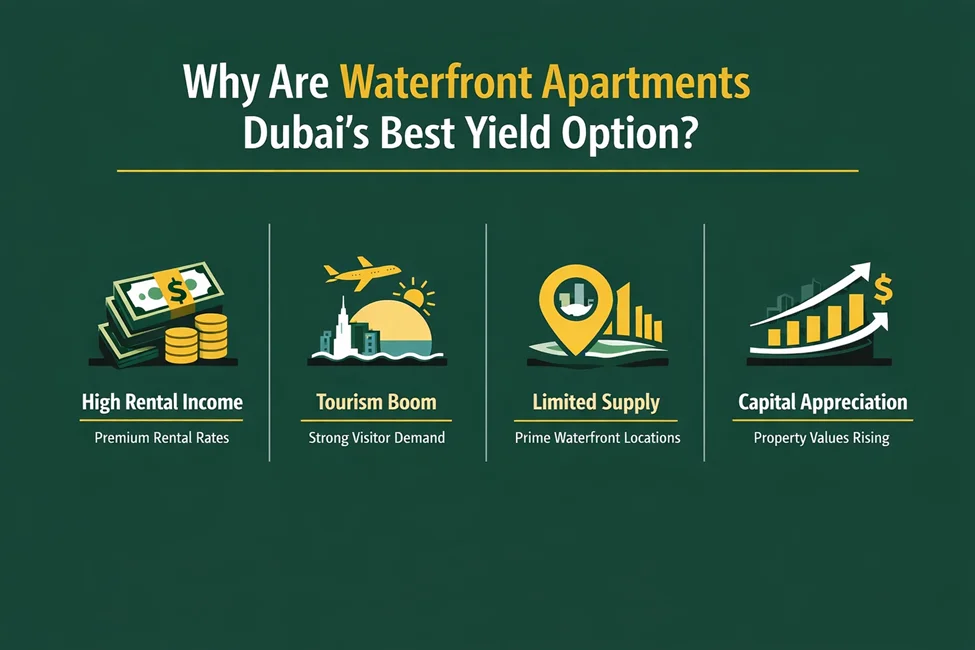
Why Are Waterfront Apartments Dubai’s Best Yield Option?
Waterfront apartments move the fastest of all three types. Palm Jumeirah and the Dubai Islands lead this market. Water views create strong, consistent returns. If you’re looking for the right Dubai real estate investment opportunity to maximise cash flow, waterfront units consistently top the list.
Investment Profile: Demand for waterfront rentals stays high all year. These homes rent easily. They also sell fast when you need to free up cash.
Financial Considerations: Growth depends on your exact spot. Front-line homes do best. Second-row units rarely match their gains. Direct beach access is what drives the gap.
Best Suited For: Yield-focused investors who want 7%+ net returns through managed short-term rentals.
Case Study: The Portfolio Pivot of a London-Based HNW Investor
The Challenge: Mr. Al-Sayed is a tech founder based in London. In early 2025, he held a cash-heavy portfolio while UK tax pressure was growing. He wanted to move £5 million into Dubai but faced a key choice: buy a mansion in District One, or spread capital across multiple waterfront units?
The Solution: After analysing villa versus penthouse returns, we recommended splitting the investment. Mr. Al-Sayed bought a five-bedroom villa in a prime zone for long-term growth, alongside two high-floor waterfront flats to generate immediate cash flow.
The Result: By mid-2026, the results were clear. The villa had grown 12% in value, driven by the community’s maturity. The waterfront units delivered a steady 8% net yield, covering his global travel and lifestyle costs.
“I thought a single trophy villa was the only option. PFOC Properties changed my mind. By splitting the capital, I captured two benefits. The villa gave me land-scarcity growth. The waterfront apartments provided high-liquidity rental income. It wasn’t just about buying property. It was about engineering cash flow.” Mr. Al-Sayed, Managing Director
What Do Elite Investors Need to Know About Dubai Property Law and Finance?
Golden Visa Eligibility (Property Route)
The Golden Visa remains the top driver of HNW investment in Dubai heading into 2026. Our full guide on how to buy Dubai property for the Golden Visa walks through every step of the process for Pakistani and international investors.
- Threshold: AED 2,000,000, roughly $545,000
- Rules: You can combine two properties to reach this total. Two waterfront flats can qualify together.
- Financing: Mortgaged homes are eligible. No minimum down payment is required, as long as the total value hits AED 2M or more.
Short-Term Rental Rules
The Dubai Department of Economy and Tourism has tightened its rules. Every unit needs a Holiday Home Permit. Most elite investors hire licensed firms to handle Tourism Dirham fees and guest sign-in. You stay hands-off while staying fully legal.
How Do Villas, Penthouses, and Waterfront Apartments Compare?
ROI Comparison
Villa vs. Penthouse ROI: Villas offer lower rental yields, around 3–5%, but produce higher capital gains over time. Penthouses can hit 6% in high-demand areas like Downtown Dubai, though vacancy risks are greater.
Waterfront vs. Villa Growth: Waterfront homes have held a higher price floor over time. When markets dip, water-facing homes hold value better than inland villas.
Liquidity and Exit Strategy
Waterfront flats resell the fastest, with an average turnaround of 30–60 days. Dubai villas take longer, typically 90–120 days, but buyers tend to be more serious. Penthouses depend on global buyer cycles. When the economy slows, the penthouse market often freezes first.
What Are Dubai Villa Prices and Penthouse Costs for 2026–2027?
Current market data shows these price ranges:
- Entry-Level Luxury Villas: AED 8M to AED 15M
- Ultra-Prime Penthouses: AED 25M to AED 150M and beyond
- Waterfront Investment Bands: AED 3.5M to AED 9M for two- to three-bedroom units
The market stays strong. Al Maktoum Airport keeps growing. The Dubai Reefs project adds more value. Both help coastal homes across all three types. For a closer look at which areas deliver the best capital protection, read the 2026 luxury playbook on Dubai neighborhoods for UHNWIs.
What Are the Legal and Tax Facts for Non-Resident Investors?
Hidden costs shape your real ROI. They can make or break your returns.
Freehold Zones: Make sure your home sits in a freehold zone. This gives you full ownership of both the home and the land under it. Our guide on the perks of investing in Dubai freehold properties explains exactly what this ownership structure means for foreign buyers.
Offshore Ownership: Many elite investors use offshore structures through JAFZA or ADGM. This makes inheritance simpler and protects assets from global tax exposure.
Dubai Property Taxes for Non-Residents: No standard property tax exists here. But you must pay the 4% Dubai Land Department (DLD) fee when you transfer ownership. For a full breakdown of all fees and charges, see the complete guide to property taxes in Dubai for international investors.
Dubai Waterfront Property Legal Requirements: Always check beach access rights before you sign. Some “waterfront” homes offer views only, with no actual beach access included. Read the title deed carefully.
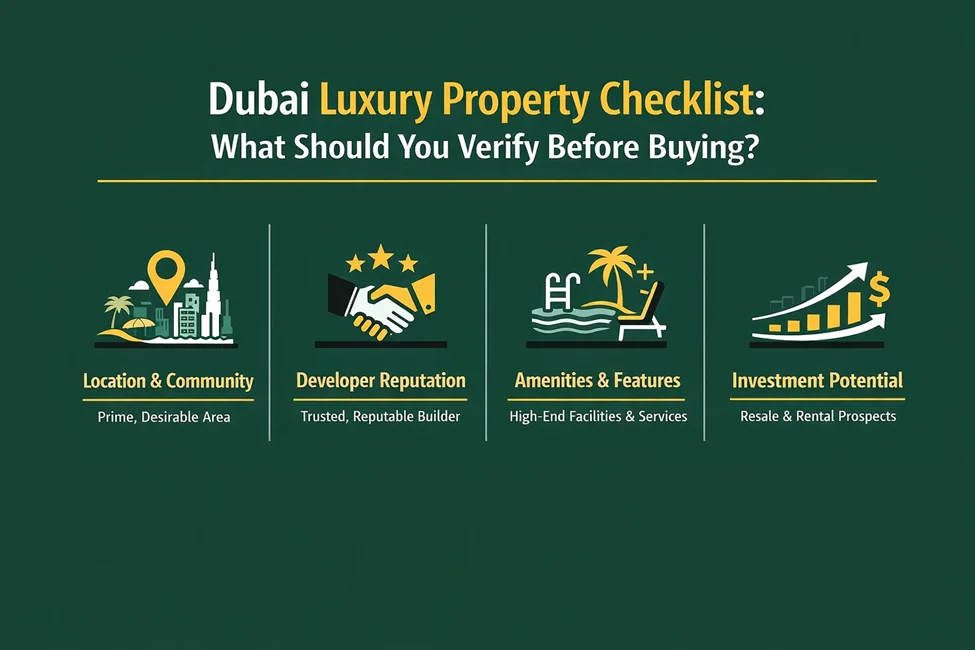
Dubai Luxury Property Checklist: What Should You Verify Before Buying?
Before you sign a Sales and Purchase Agreement (SPA), confirm these five things:
- Title Check: Confirm the seller owns the home. Use the Dubai Rest app to verify.
- Service Fee Audit: Ask for three years of service fee records. Review the building’s financial history.
- Developer Track Record: Research whether the developer builds to a high standard or cuts corners.
- No-Objection Certificate (NOC): Confirm no outstanding developer debts exist. This certificate proves clean standing.
- Exit Liquidity: Study the number of sales in that specific tower over the past 12 months.
How Should You Plan Your Exit and Manage Risk?
Buying right is only half the battle in 2026. You also need a clear exit plan.
Villa Exit: Local families and long-term residents form the main buyer pool. Villas hold value well during downturns and stay stable through most market swings.
Waterfront Exit: Global investors drive this market, and liquidity is the fastest across all three types. Strong waterfront homes often resell within 30 to 60 days.
Penthouse Risk: The exit window is narrow. When the global economy slows, buyer pools shrink fast. A $50M penthouse has very few potential buyers at any given time.
What Are the Main Investor Profiles in Dubai Real Estate?
The Capital Growth Investor: This investor targets growth areas like Dubai South. They watch 2026 villa prices closely for land-banking chances.
The Yield-Focused Investor: This investor targets high-density waterfront zones like Dubai Marina and Business Bay. Rental income drives their whole strategy.
The Lifestyle and Residency Investor: This investor usually picks a villa or large penthouse. They want to meet the Golden Visa limit while securing a family home.
What Are the Most Common Dubai Property Myths?
“Dubai has no property costs.” This is false. No income tax exists, but the 4% DLD fee applies at purchase. Ongoing service charges also apply.
“Villas are hard to rent.” This is outdated. Demand for luxury villa leases is at an all-time high in 2026. Long-term leases often reach AED 500,000 or more per year.
“Penthouses always go up in value.” This isn’t guaranteed. Poor building management can stall a penthouse’s value even when the wider area is thriving.
How Can PFOC Properties Help You in the Dubai Market?
At PFOC Properties, we work as part of your family office or investment team, not just as agents showing listings.
Strategic Property Selection: We use data-driven analysis to match your risk profile. We can target 2026 penthouse yields or help you land-bank through villas.
Legal and Ownership Structuring: We guide you through offshore ownership so your assets stay safe from global tax exposure.
Investment Due Diligence: We provide five-year ROI forecasts and exit roadmaps. You see the full picture before you commit a single Dirham.
FAQ’s:
Which Dubai property type gives the highest ROI for elite investors?
Waterfront apartments offer the highest net rental ROI, typically 6–8%. Villas offer the highest total return when you add capital gains to rental income.
Are villas more profitable than penthouses in Dubai?
Villas are more stable and predictable. Penthouses can earn more as flips if you buy off-plan in a rising market. But they carry much higher holding risk.
Do waterfront apartments offer better rental yields than villas?
Yes. Entry prices are lower and short-term holiday rental demand is strong. Waterfront units usually beat villas on cash-on-cash return.
What are the average purchase costs for villas and penthouses in Dubai?
Prime villas start from around AED 10 million in 2026. Entry-level luxury penthouses begin between AED 15 million and AED 20 million.
How do maintenance and service fees compare across asset types?
Villas carry private costs you pay on your own, such as AC, pool, and garden upkeep. Penthouses carry high service fees, typically AED 25–60 per square foot paid to building management.
Which Dubai property holds the best resale value long-term?
Villas hold resale value best. Land scarcity and strong demand from Dubai’s growing family population are the two key drivers.
What legal rules apply to Pakistani investors buying Dubai property?
Pakistani investors need a valid passport and must follow UAE Anti-Money Laundering (AML) rules. Pakistan’s FBR outward remittance rules also apply to any funds sent abroad. For a full breakdown specific to Pakistani buyers, read our guide on property investment in UAE from Pakistan.
How do location and amenities affect returns across all three types?
A strong branded amenity package, such as a hotel-managed gym, can raise rental premiums by up to 20% across all asset types.
Are waterfront apartments riskier than penthouses or villas?
They carry less liquidity risk. But they’re more exposed to new supply. A new tower that blocks your view can cut your home’s value fast.
Which Dubai luxury property is best for short-term vs. long-term investment?
Short-term plays work best with waterfront apartments. Long-term holds work best with prime villas in well-established communities.
Conclusion: Your Next Move in the Dubai Market
The right choice between villas, penthouses, and waterfront apartments comes down to your timeline and goals. Want to park capital in a safe, growing asset? The Dubai villa is your best bet. Need a high-yield income engine with fast liquidity? Waterfront apartments are the clear pick. Want prestige alongside solid returns? A well-chosen penthouse can deliver both. Contact PFOC Properties today for a private consultation and a tailored 2026 property shortlist based on your ROI targets and current market availability.